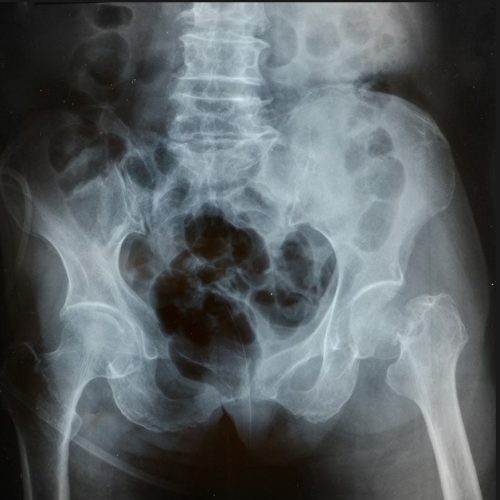
The pelvis is the ring of bone that connects the spine to the legs. The acetabulum is the socket of the hip joint, formed where the bones of the pelvis meet.
How they happen
In younger people, these fractures usually result from high-energy injuries such as car and motorbike accidents or falls from a height, and there are often other injuries at the same time. In older people with weaker bones, a simple fall can fracture the pelvis.
Initial treatment
Serious pelvic fractures can cause significant bleeding and are managed first in the emergency unit, where the patient is stabilised and the pelvis may be held with a binder or temporary external frame. CT scans show the exact pattern of the fracture.
Definitive treatment
Stable fractures, including many low-energy fractures in older adults, are treated without surgery: pain relief, early mobilisation with a walking aid and physiotherapy.
Unstable or displaced fractures usually need surgery to realign the bones and fix them with plates and screws. For acetabular fractures, the goal is to restore the smooth joint surface as closely as possible, because an uneven surface increases the risk of arthritis later.
Recovery
Protected or limited weight-bearing on crutches, often for six to twelve weeks
Physiotherapy to restore walking, hip movement and strength
Recovery usually takes several months, and longer after high-energy injuries
Long term outlook
Some patients develop arthritis in the hip after an acetabular fracture, sometimes years later. If this happens, a hip replacement may be needed. Your surgeon will follow your progress with X-rays.