
Knee replacement (knee arthroplasty) resurfaces a damaged knee joint. The worn ends of the thigh bone and shin bone are shaped and covered with metal components, with a plastic spacer between them that acts as the new cartilage. In some cases, the back of the kneecap is resurfaced too.
When arthritis affects only one part of the knee, a partial knee replacement may be an option. Your surgeon will explain whether this suits you.
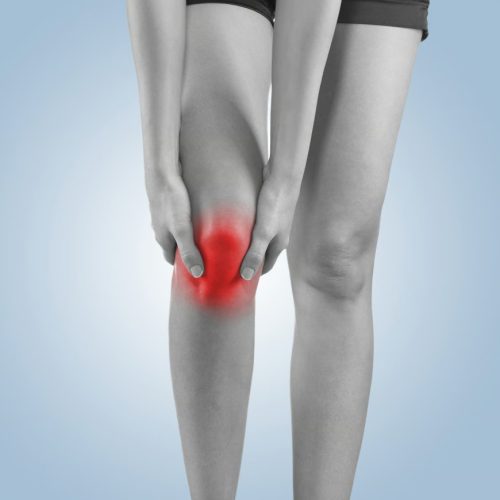
Knee replacement is most often done for osteoarthritis. It’s also used for rheumatoid arthritis and for arthritis that develops after an injury. Surgery is considered when knee pain, stiffness or deformity significantly affects walking, sleep and daily activities, and non-surgical treatment is no longer controlling the symptoms.
In robotic-assisted knee replacement, the surgeon uses a robotic system to help plan the operation and position the implants accurately. The surgeon performs the operation; the robotic arm assists with precision. It is one of several accepted techniques, and your surgeon will discuss whether it is appropriate for you.
Knee replacement recovery takes commitment. Physiotherapy starts in hospital, and regaining the ability to bend the knee depends heavily on doing your exercises.
Risks include infection, blood clots, stiffness, ongoing pain, fracture around the implant, and nerve or blood vessel injury. Over time, the implant can wear or loosen, which may need revision surgery. Your surgeon will discuss your individual risks.
Revision surgery replaces some or all of the components of an existing knee replacement that has worn, loosened, become unstable or infected. It’s a more complex operation, often needing specialised implants.
Dr S.A. Moodley, Dr S. Sathyapal, Dr A.D. Bhatta, Dr S. Khan, Dr D.D. Beekarun. Revision surgery: Dr A.D. Bhatta, Dr S. Khan. Robotic-assisted knee replacement: Dr A.D. Bhatta.